Insights.
Notes from eighteen months of building AI-enriched systems, every day. What holds, what breaks, and what the system needs from the model.
- Part 09
Lenswork: perspective matters.
A language model on its own gives you one perspective, the middle, and it reads as finished. A working model for bringing the other perspectives back in: lenses on a draft you already like, and on the hard questions a second model from another vendor. With a test of whether it changes anything, and what happens when nobody weighs the result.
For: anyone doing knowledge work with a language modelAlso for: people who decide what that work is worth
- Part 08
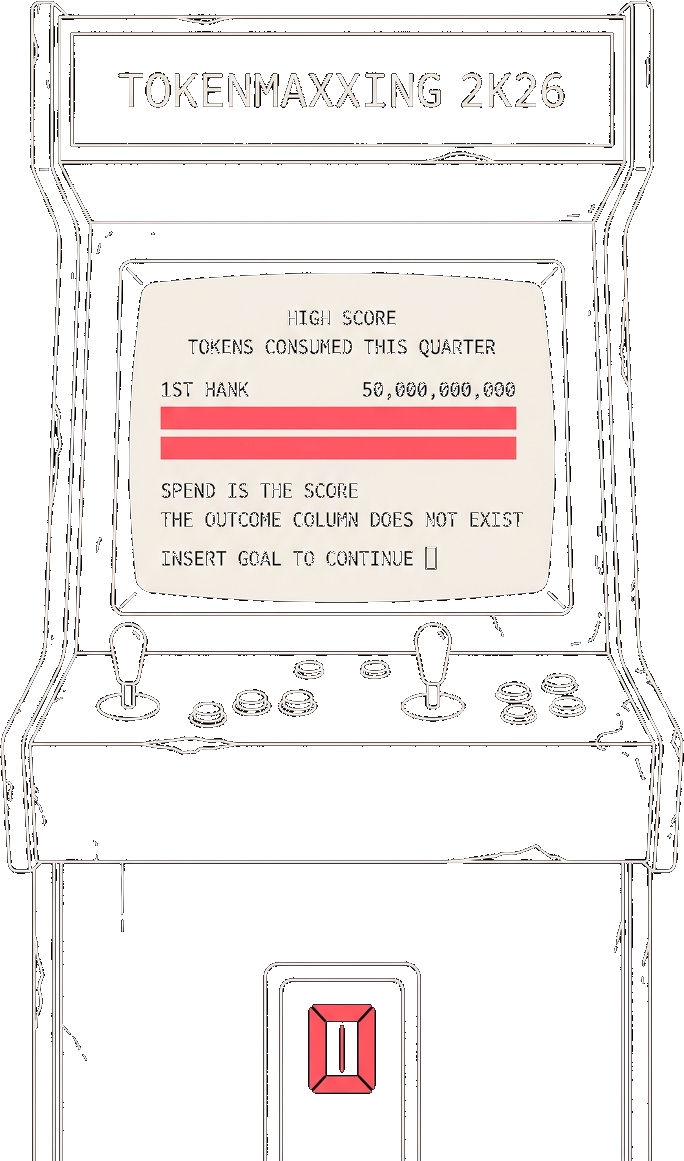
Anthropic wrote the rule for counting tokens. Its own meter breaks it.
Four articles in this series rested on fifty billion tokens. The number came from Claude Code's own usage meter, and it is double: the meter counts every call two to four times, the correct rule is in Anthropic's own documentation, and the product follows it everywhere except the one screen a subscriber sees. What I got wrong, the twelve-month timeline, and a counter you can run yourself.
For: anyone who pays a flat rate for an AI toolAlso for: the CTO who screenshots the usage screen for the board
- Part 07
The agent wrote "done". The lawyer wrote forty-one comments.
Eighteen months of daily work with agents: every model moves the line, above all in code, where there is an answer to check against. In knowledge work the line moves less, and the research says the longer an agent runs alone, the worse it gets. A chain that delivered fifty-four articles as done, a lawyer who found the errors, and where I place the check now.
For: anyone who delegates work to AI agentsAlso for: owners who will be asked what they noticed, and when
- Part 06
Research agents find the market you send them to find
In July I spent 1.9 billion tokens building a strategy for a market that closed years ago; the run that told me was never saved. So I built a new test: twelve models, the same brief, twice over: with one added paragraph, eleven of twelve said no. Without it, eleven of twelve handed me a go-to-market plan.
For: anyone who delegates research to AIAlso for: boards and investors reading AI-built validations
- Part 05
Differentiation is dead, long live differentiation
Eleven AI models, one open question, eleven go-to-market strategies that are in practice one document, priced at the market’s existing midpoint. An experiment in machine convergence, checked against Stockholm’s actual bakeries, and the one dividing line that holds: production versus strategy.
For: people setting directionAlso for: marketers and strategists
- Part 04
What did fifty billion tokens buy?
My AI ledger passed fifty billion tokens in one quarter, and at list price it reads like the annual AI budget of a whole company. An audit entry by entry: what each line went to, what the goal was, what came out, and why spend alone cannot tell a purchase from a leak.
For: people setting directionAlso for: the technically curious
- Part 03
Is it intelligent, or is it a probability machine?
A language model gives you the most probable continuation of what you typed. That one fact explains why it feels intelligent, why it is convincing when wrong, and why it drifts toward the obvious. What the machine is, where it breaks, and what to expect from it instead.
For: people holding the toolsAlso for: everyone. It’s the baseline
- Part 02
When in Rome, search in Italian.
A language model asks its questions in English by default, and most of the answers a European needs were never written in English. How the gap hides, what one instruction multiplied, and how to keep it closed.
For: people holding the toolsAlso for: anyone running research agents
- Part 01
Everyone knows the why. Nobody knows the what.
Established companies are spending real money on AI and getting very little back. Three mistakes keep coming round: the wrong measure, the wrong person, the wrong end. What it looks like, what it costs, and the order that actually works.
For: people setting directionAlso for: process owners



Get every article by email.
Each piece lands in your inbox as it publishes. No digest, no promotions, just the articles.